What Is Organic Potato Powder? Uses, Benefits, and Sourcing Guide
Nov 3, 2026· Views: 1· Author: Hannah Li, Ingredient Specialist
Organic Potato Powder is a plant-based ingredient produced from organically grown potatoes. It is commonly used in bakery products, snack formulations, soup and sauce mixes, seasoning blends, plant-based foods, instant mashed potato products, and clean-label food formulations. The powder delivers natural potato flavor, mild starch character, neutral taste, and vegetable-derived solids in a convenient dry format.
For bulk buyers, organic potato powder is evaluated by potato variety, processing method, starch content, moisture control, particle size, microbial safety, and organic certification. This article provides an overview for manufacturers, brand owners, and procurement teams sourcing vegetable and starch powders for commercial production.
What Is Organic Potato Powder?
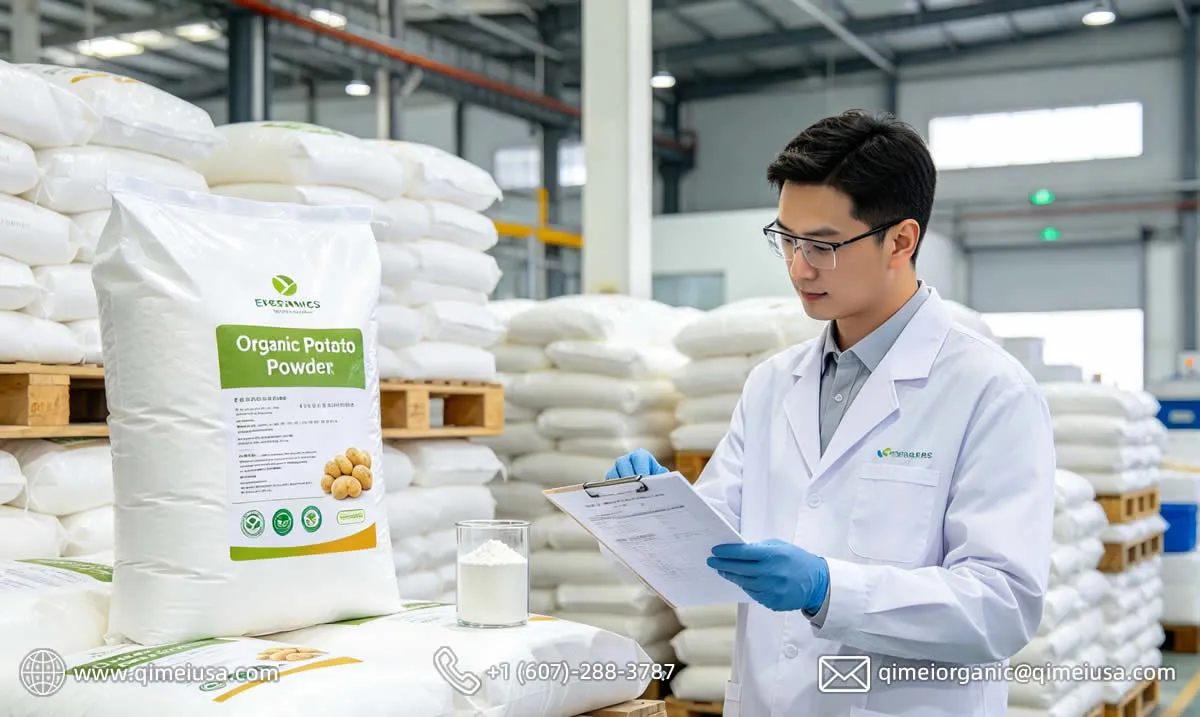
Organic potato powder is typically made from potatoes of the genus Solanum, commonly Solanum tuberosum. The potatoes are harvested, washed, peeled, cooked or processed, and then dried and milled into a fine powder. Depending on the process, the final product may be drum-dried, spray-dried, air-dried, or freeze-dried.
It is important to distinguish between potato powder, potato starch, potato flakes, dehydrated potato powder, and potato flour. Potato powder is generally made from whole or partially processed potatoes that are dried and milled. Potato starch is a purified starch extracted from potatoes and has a different functional profile. Potato flakes are usually drum-dried cooked potato and may have a coarser texture. Dehydrated potato powder refers to dried potato material with varying processing levels. Potato flour may be made from whole dried potatoes and can contain more fiber and protein than purified starch.
Organic potato powder usually has a white to light cream color, a mild potato aroma, and a neutral to slightly starchy flavor. Its solubility, thickening behavior, and texture contribution depend on the processing method and particle size.
Why Choose Certified Organic Potato Powder?
Clean-Label Vegetable Ingredient: Supports plant-based, naturally derived, and minimally processed product positioning.
Neutral Flavor Base: Provides mild potato character without overpowering other ingredients, making it suitable for savory and neutral applications.
Easy Handling: Powder formats are easier to store, transport, and dose than fresh potatoes, cooked potato, or potato puree in many production environments.
Broad Application Potential: Suitable for bakery products, snacks, soups, sauces, seasonings, instant foods, and functional food concepts.
Global Market Access: Valid certifications such as USDA Organic or EU Organic may support market entry, subject to local regulations.
Key Components
Organic potato powder is valued for its vegetable-derived composition. Typical components may include natural carbohydrates, which contribute to body, texture, and energy content. Potato starch provides thickening, binding, and structure support in food applications. Small amounts of protein, dietary fiber, potassium, vitamin C, and B vitamins may also be present, although actual levels vary by variety, processing method, and whether the powder is made from whole potato or purified starch. Resistant starch may be present depending on processing and cooling conditions.
Nutrient and functional compound levels are not fixed and should be confirmed through specification sheets and batch testing. Any nutrition or health-related claims must be truthful, substantiated, and compliant with applicable regulations.
Manufacturer Sourcing Guide: How to Evaluate Suppliers
When sourcing organic potato powder in bulk, it is recommended to verify the following points.
1. Confirm Botanical Identity
Ensure the product is derived from potato, typically Solanum tuberosum. The botanical name, potato variety if applicable, processing type, and country of origin should be clearly stated on technical documents.
2. Verify Organic Certification
Request current organic certificates and confirm that the certificate is valid and issued by an accredited body. The certification scope should include potato powder, dehydrated potato, potato flakes, or potato starch if applicable. The certification should be recognized in the target market. Transaction Certificates should be available for each shipment when required.
3. Clarify Product Type and Processing Method
Confirm whether the product is whole potato powder, dehydrated potato powder, drum-dried potato powder, spray-dried potato powder, freeze-dried potato powder, potato flakes, or potato starch. Also confirm whether carriers, anti-caking agents, or other additives have been included, as this affects labeling and clean-label positioning.
4. Review Quality and Safety Documentation
Key documents may include a specification sheet, Certificate of Analysis, organic certificate, microbiological test results, heavy metal test results, pesticide residue screening, moisture and water activity data, particle size data, starch content data if applicable, allergen statement, Non-GMO statement if applicable, and irradiation statement if applicable.
5. Assess Sensory and Physical Properties
High-quality organic potato powder should have a consistent white to light cream color, a mild potato aroma, and a clean, neutral flavor. Important physical indicators include moisture content, particle size, bulk density, flowability, solubility or dispersibility, water absorption, and thickening behavior.
Applications
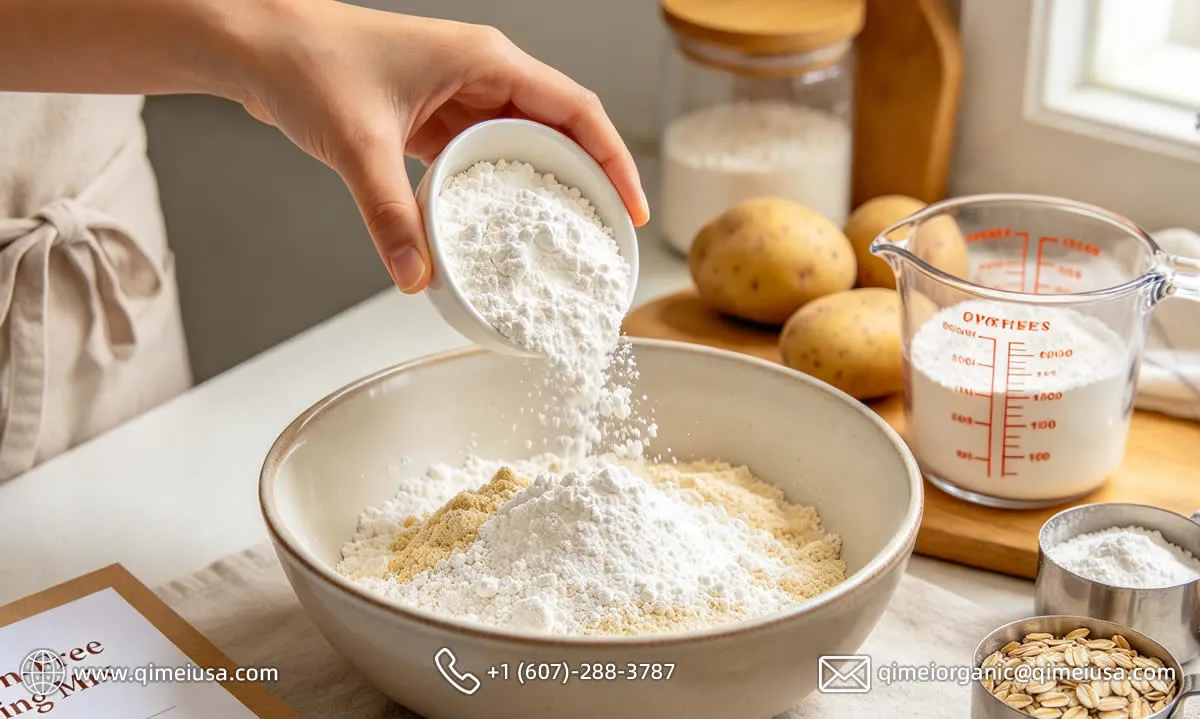
Bakery and Gluten-Free Products: Used in gluten-free bread, crackers, cookies, and bakery blends where potato powder or potato starch contributes texture and moisture retention.
Snack and Extruded Products: Suitable for potato-based snacks, extruded snacks, chips, puffed products, and seasoning carriers.
Soup and Sauce Mixes: May be used in instant soup blends, cream soup bases, sauce thickeners, and savory dry mixes.
Instant and Convenience Foods: Suitable for instant mashed potato products, meal replacement powders, ready-to-cook mixes, and dehydrated meal components.
Plant-Based and Clean-Label Formulations: Can be used as a natural vegetable ingredient, texture modifier, or clean-label carrier in plant-based foods and minimally processed formulations.
Conclusion
Organic potato powder is a versatile vegetable and starch ingredient for bakery products, snacks, soups, sauces, instant foods, and clean-label formulations. Successful sourcing depends on confirming botanical identity, product type, processing method, functional properties, organic certification, and food safety documentation. It is recommended to request samples and review batch-specific test reports before placing a bulk order.
Request Samples and Specifications
If you are sourcing organic potato powder for commercial production, please contact us for samples, specification sheets, and certification details. We support manufacturers and brand owners from formulation development through bulk supply.
👉 Explore the product here : Organic Potato Powder
Disclaimer
These statements have not been evaluated by the Food and Drug Administration. This product is sold as a bulk ingredient and is not intended to diagnose, treat, cure, or prevent any disease.
This article is provided for general informational and educational purposes only and does not constitute legal, regulatory, medical, or professional advice. Readers should consult qualified regulatory counsel or compliance professionals to determine applicable requirements for their specific products, formulations, labeling, claims, and markets.