Sourcing Superfood Powders for Food & Beverage Formulation: A B2B Compliance and Procurement Guide
Nov 24, 2026· Views: 7· Author: Hannah Li, Ingredient Specialist
Superfood powders—green ingredients made from cereal grasses, algae, and leafy greens—continue to grow in use across smoothies, functional beverages, powdered drink mixes, and dietary supplements. For buyers, however, the challenge is not availability but whether the ingredient can be sourced safely, compliantly, and reproducibly. Written from a procurement standpoint and illustrated with one representative ingredient—organic wheat grass powder—this article outlines the compliance and supply points worth verifying, while deliberately keeping claims cautious: anything touching composition, certification, or labeling is subject to supplier certificates, lot-specific COAs, and destination-market regulations.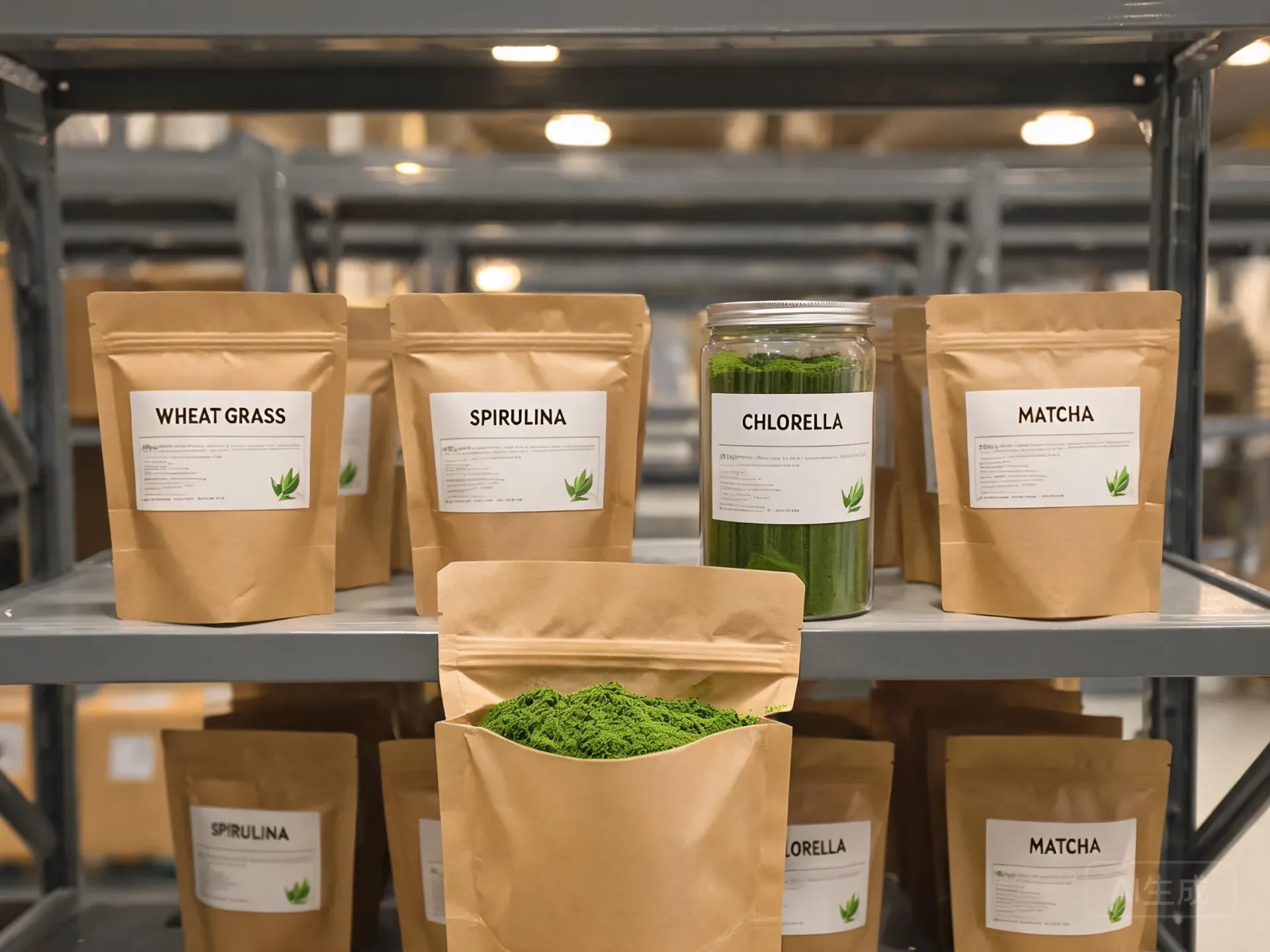
1. Why This Category Calls for Extra Caution
Superfood powders combine agricultural variability with high labeling sensitivity. Color, aroma, and terms like "natural" or "green" look similar on paper yet can differ materially by origin, harvest stage, and drying method. The prudent buyer reduces every claim to verifiable evidence rather than accepting general descriptions.
- Claims Must Rest on Certificates and COAs: Any "organic," "gluten-free," or "Non-GMO" label should trace to a certificate with a defined scope covering the exact product and facility, corroborated by a lot COA. A mismatch between certificate scope and physical goods is the category's most common compliance failure.
- Composition Is a Description, Not an Efficacy Promise: The natural constituents an ingredient contains (such as chlorophyll, minerals, or dietary fiber) describe composition, not health or therapeutic benefit. Wheat grass powder's green color derives from natural chlorophyll, and the source explicitly frames such content as composition with no health claims implied. Buyers should apply the same restraint on finished-product labels.
2. Understanding the Category Through One Representative Ingredient: Organic Wheat Grass Powder
Organic wheat grass powder is produced by low-temperature air-drying and milling the young green leaves of organically grown wheat grass (Triticum aestivum) into a fine green powder that retains a fresh grassy flavor and a vivid green color from chlorophyll. It is used across dietary supplements, functional foods and beverages, health drinks, sports nutrition, smoothie mixes, capsules and tablets, and food ingredients. Understanding how this single ingredient is handled and documented helps buyers evaluate the wider superfood-powder category by analogy.
- Why Air-Drying Matters: Air-drying is a comparatively gentle, low-heat method, relatively favorable for retaining natural pigments and some heat-sensitive components—though actual retention should be verified batch by batch via COA rather than assumed.
- A Whole-Leaf Powder and Its Dispersion: As an air-dried whole-leaf powder, it disperses in smoothies, shakes, and beverages; because natural leaf fiber is retained, some fine green sediment may appear rather than full dissolution. This is a format characteristic, not a defect.
- Color Stability Requires Careful Evaluation: The green comes from chlorophyll, which behaves differently from berry or beet pigments—holding best in neutral to slightly alkaline systems but shifting toward olive-brown under acid, heat, light, and oxygen. Strongly acidic or high-heat systems may dull the green, so buyers should validate in their own formulation.
- Prudent Confirmation of "Gluten-Free": Wheatgrass is harvested at the young-leaf stage before the grain develops, so it does not contain the gluten proteins found in wheat kernels, and the product carries a Gluten-Free statement. Because the source plant is wheat, buyers formulating for gluten-sensitive or celiac markets should still confirm the lot-level gluten result in the COA before making a gluten-free claim on their own label.
3. Compliance and Documentation: What to Request Before Ordering
Compliance scrutiny for superfood powders is stricter than for many commodities, so buyers should complete document review before the first order and treat it as a gate. For wheat grass powder specifically, organic certification spans multiple programs including USDA, EU, Canada, China, and Japan, with a Transaction Certificate available on request; additional statements cover Kosher, Non-GMO, Non-Irradiated (and Non-ETO), and Gluten-Free. Which documents apply to a given lot and market remains subject to the actual certificates and batch files.
- Match Certification Scope Market by Market: Organic programs are not automatically interchangeable across markets. For U.S., EU, or other destinations, confirm the relevant organic certificate and the product and facility it covers.
- Food Safety Scheme Documentation: Verify whether the supplier holds BRC, ISO 22000, or HACCP scheme credentials, and whether pesticide, heavy-metal, and microbiological reports accompany each lot. Test data serve destination-market requirements only and imply no additional health claim.
- Traceability and Lot Consistency: Prefer suppliers controlling the chain from planting and harvest through processing and packaging, able to link a finished lot to a specific farm and harvest. Color and flavor are lot-level attributes for green powders; manage them against a mutually signed reference sample.
4. Supply and Application Points
- U.S. Warehouse Shipping: Finished powders are warehoused in the United States, and in-stock orders can ship directly from the U.S., shortening lead times for North American customers. Current availability and lead time are confirmed with the quote.
- Fit-for-Use Must Be Self-Validated: Whether used as a green ingredient or a natural green color, final suitability rests on the buyer's own formulation and destination-market regulations; finished-label claims must be confirmed for compliance independently.
- Storage and Stability: Green powders should be kept sealed, light-resistant, moisture-protected, and cool. Light and heat accelerate chlorophyll degradation, so proper storage helps preserve color and quality.
5. Information to Prepare Before Requesting a Quote
To obtain a faster and more accurate response, state up front the target application and format (beverage, smoothie, capsule, drink mix, etc.), the intended destination market and required certifications, approximate volumes and trial-order needs, packaging and lead-time requirements, and the documents you need with the shipment (COA, spec sheet, certificates). Request samples and evaluate them in your real formulation before committing to volume.
6. Next Step
If you are evaluating superfood powders for food, beverage, or supplement formulations, first clarify the application, destination market, and required documentation, then request samples, specification information, and lot COAs to advance the sourcing decision in a cautious, verifiable manner.
To explore more superfood powders across our cereal grass, algae, and leafy green range, visit our Superfoods page for a product overview and to request samples and documentation: https://www.qimeiusa.com/superfoods
Disclaimer:
This content is for general B2B informational purposes only. It does not constitute legal, regulatory, or professional advice and makes no health, therapeutic, or nutritional-efficacy claim. Statements on composition, certification, and labeling are subject to the supplier's actual certificates, lot-specific COAs, and destination-market regulations. Any ingredient statements have not been evaluated by the U.S. Food and Drug Administration; the product is sold as a bulk ingredient and is not intended to diagnose, treat, cure, or prevent any disease. Buyers should independently verify labeling, claims, and import requirements for their specific destination markets with qualified compliance counsel.
More to explore