
Organic Matcha Powder: From Tea Garden to Finished Product
Oct 21, 2026· Views: 12· Author: Hannah Li, Ingredient Specialist
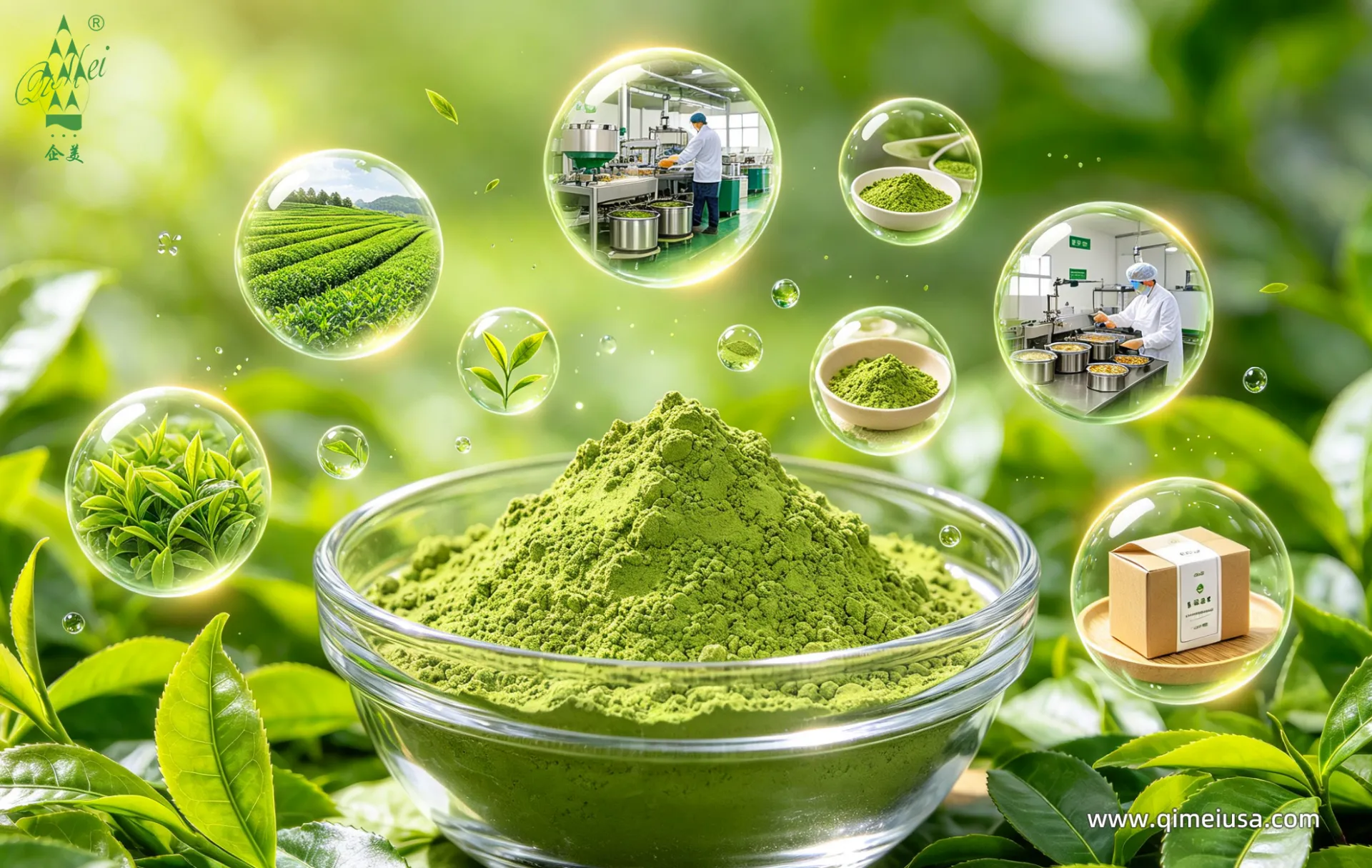
As health foods, functional beverages, and clean-label products gain increasing favor among global consumers, organic matcha powder has become a highly sought-after core ingredient in the dietary supplement, food and beverage, and cosmetics industries, thanks to its unique flavor, vibrant color, and rich nutritional profile.
As a professional grower and processor, we understand that for manufacturers and brand owners, bulk sourcing organic matcha is about far more than comparing prices — it is a rigorous selection process centered on quality, safety, and compliance. This article provides an in-depth look at organic matcha production standards, its key nutritional components, and a practical sourcing checklist for buyers.
What Is True Organic Matcha Powder?
Organic matcha powder is not ordinary green tea powder. It is derived from shade-grown tea plants (Camellia sinensis). Before harvest, the plants undergo a specific shading process to promote the accumulation of chlorophyll and amino acids such as L-theanine. After harvesting, the fresh leaves are steamed (or heat-treated), dried, de-stemmed, and de-veined to produce "tencha," which is then ground into micron-level powder using stone mills or modern fine-grinding technology.
Unlike conventional green tea, which is brewed and discarded, matcha is consumed as a whole leaf. This means that pesticide control, heavy metal testing, and processing hygiene standards directly determine the safety of the final product. Therefore, "matcha-grade" should not merely be a marketing term, but should represent a strict set of production standards.
Why Choose Certified Organic Matcha?
- Higher Food Safety Standards: Organic certification prohibits the use of synthetic pesticides, chemical fertilizers, and GMOs during cultivation, reducing contamination risks at the source.
- Clean-Label Advantage: For brands positioning themselves as "natural" and "pure," organic matcha is an excellent ingredient that helps elevate product positioning.
- Global Market Access: Valid organic certifications (such as USDA, EU Organic, JAS, etc.) serve as a passport for entering European, American, and premium Asian markets.
Key Nutritional Components
As a whole-leaf ground superfood, organic matcha powder retains the vast majority of water-soluble and fat-soluble nutrients found in tea leaves, making it an ideal raw material for developing functional foods:
- Rich in Tea Polyphenols (especially EGCG): Matcha is rich in catechins, particularly epigallocatechin gallate (EGCG). This potent antioxidant is commonly used in dietary supplements designed to support metabolism and immune health.
- L-Theanine: This unique amino acid gives matcha its signature "umami" flavor. It promotes relaxation without causing drowsiness and works synergistically with natural caffeine to provide smooth, sustained energy release, avoiding the jittery feeling often associated with coffee.
- Natural Caffeine: Matcha typically contains higher caffeine levels than regular green tea, making it suitable as a natural energy source for energy drinks and sports nutrition products.
- Chlorophyll and Dietary Fiber: The shading cultivation process significantly increases chlorophyll content, giving the powder its vibrant emerald green color while offering certain detoxifying and alkaline-balancing properties. Additionally, because the whole leaf is consumed, consumers also benefit from rich dietary fiber.
- Vitamins and Minerals: Contains Vitamin C, Vitamin E, beta-carotene, and trace minerals such as potassium, calcium, and magnesium.
Manufacturer Sourcing Guide: How to Evaluate Suppliers
When bulk sourcing organic matcha powder, we recommend that procurement and R&D teams focus on verifying the following five dimensions:
1. Verify the Authenticity and Scope of Organic Certification
Do not rely solely on verbal claims of "organic." Always request the supplier's current organic certificate and verify the following:
Do not rely solely on verbal claims of "organic." Always request the supplier's current organic certificate and verify the following:
- Is the certificate valid?
- Does the scope clearly include "matcha" or "green tea powder"?
- Are the certificate number and issuing body authoritative?
- If the product is for export, is the certification recognized by the destination country?
- Professional Tip: For each shipment, request a Transaction Certificate (TC) to ensure traceability.
2. Confirm Botanical Identity and Origin
Confirm that the raw material is derived from Camellia sinensis. The origin's climate, soil, and shading process directly affect the matcha's color (vibrancy), umami, and astringency balance. A quality supplier should be able to provide complete traceability from the finished powder back to specific cultivation plots.
Confirm that the raw material is derived from Camellia sinensis. The origin's climate, soil, and shading process directly affect the matcha's color (vibrancy), umami, and astringency balance. A quality supplier should be able to provide complete traceability from the finished powder back to specific cultivation plots.
3. Physicochemical Indicators and Sensory Quality
Different applications have different requirements for matcha. Request a detailed Specification Sheet from the supplier, paying attention to:
Different applications have different requirements for matcha. Request a detailed Specification Sheet from the supplier, paying attention to:
- Color: Does it exhibit a vibrant emerald green? (Quantifiable via colorimeter Lab* values)
- Particle Size: Is the fineness sufficient for your dissolution or dispersion needs?
- Moisture: Typically should be controlled at low levels to ensure shelf life.
- Sensory: Is the aroma fresh? Is the taste brisk and umami-rich?
4. Rigorous Food Safety Testing
Since matcha is consumed as a whole leaf, food safety is paramount. Suppliers should be able to provide a Certificate of Analysis (COA) and third-party test reports for each batch, covering:
Since matcha is consumed as a whole leaf, food safety is paramount. Suppliers should be able to provide a Certificate of Analysis (COA) and third-party test reports for each batch, covering:
- Microbiological indicators (total plate count, coliforms, Salmonella, etc.)
- Heavy metals (lead, arsenic, mercury, cadmium)
- Pesticide residue screening (ensuring compliance with organic standards and destination country regulations)
5. Purity and Additive Declarations
Pure organic matcha should not contain any undeclared additives, fillers, or artificial colors. If your product features a clean label, be sure to confirm that the supplier has not added maltodextrin, anti-caking agents, or other carriers, unless these are clearly disclosed in the ingredient list.
Pure organic matcha should not contain any undeclared additives, fillers, or artificial colors. If your product features a clean label, be sure to confirm that the supplier has not added maltodextrin, anti-caking agents, or other carriers, unless these are clearly disclosed in the ingredient list.
Applications of Organic Matcha
- Dietary Supplements: Used in capsules, tablets, or daily health drink mixes to provide natural caffeine and antioxidants.
- Functional Beverages: Suitable for ready-to-drink (RTD) teas, latte premixes, smoothies, and energy drinks. Dispersibility and color stability should be closely monitored.
- Food and Baking: Used in bread, ice cream, chocolate, noodles, and plant-based dairy alternatives. Note the impact of processing temperatures on color and flavor.
Conclusion
Choosing the right organic matcha supplier is a critical step in ensuring the success of your final product. We recommend requesting samples for internal evaluation and strictly reviewing all relevant documentation before placing an order.
Ready to Start Your Next Project?
If you are looking for stable, compliant, and high-quality organic matcha powder ingredients, please contact us to request samples and the latest specification sheet. We are dedicated to supporting your product development.
If you are looking for stable, compliant, and high-quality organic matcha powder ingredients, please contact us to request samples and the latest specification sheet. We are dedicated to supporting your product development.
👉 Explore the product here : Organic Matcha Powder
Disclaimer
These statements have not been evaluated by the Food and Drug Administration. This product is sold as a bulk ingredient and is not intended to diagnose, treat, cure, or prevent any disease.
This article is provided for general informational and educational purposes only and does not constitute legal, regulatory, medical, or professional advice. Readers should consult qualified regulatory counsel or compliance professionals to determine applicable requirements for their specific products, formulations, labeling, claims, and markets.