Organic Barley Grass Powder: Bridging the Gap from "Superfood" to Industrial Standard
Sep 9, 2026·Views: 9
As plant-based nutrition and Clean Label trends sweep the global health market, Organic Barley Grass Powder has firmly established itself as a core ingredient in dietary supplements and functional foods. This is thanks to its excellent plant protein, high chlorophyll concentration, SOD (superoxide dismutase) enzymes, and rich trace minerals. However, product quality varies significantly in the market. Truly export-grade organic barley grass powder with high bioavailability requires overcoming substantial industrial barriers.
Why Is Your Barley Grass Powder "Not Green Enough, Not Soluble Enough, and Lacking Aroma"?
Homemade or low-end contract-manufactured barley grass powder often suffers from three major pain points: dull color, clumping when mixed, and nutrient degradation. To meet export-grade standards, three critical industrial hurdles must be cleared:
1. The "Golden Harvest Window" for Raw Materials
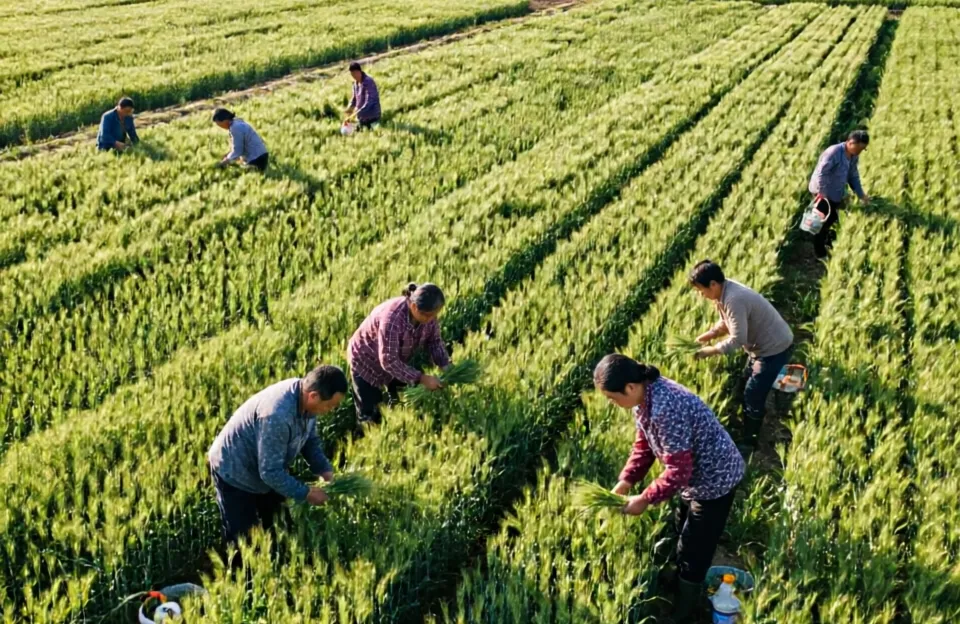
Barley grass is not regular barley; it refers to the young seedlings harvested at 20-30 cm in height (about 30-45 days after sowing), before the plant produces ears or seeds. At this stage, the leaves reach their peak levels of plant protein, chlorophyll, SOD, and vitamins. Once this window passes, the plant fibers toughen, nutrient density plummets, and the taste becomes bitter. Export-grade raw materials must strictly adhere to organic farming standards, ensuring zero pesticide residues, no heavy metal contamination, and the exclusive harvesting of the most tender leaf tips.
Barley grass is not regular barley; it refers to the young seedlings harvested at 20-30 cm in height (about 30-45 days after sowing), before the plant produces ears or seeds. At this stage, the leaves reach their peak levels of plant protein, chlorophyll, SOD, and vitamins. Once this window passes, the plant fibers toughen, nutrient density plummets, and the taste becomes bitter. Export-grade raw materials must strictly adhere to organic farming standards, ensuring zero pesticide residues, no heavy metal contamination, and the exclusive harvesting of the most tender leaf tips.
2. The "Active Ingredient Defense" in Drying
Traditional high-temperature drying instantly destroys heat-sensitive active compounds (like SOD enzymes and Vitamin C) and degrades chlorophyll into pheophytin (causing the color to shift from vibrant green to yellowish-brown). Top-tier facilities utilize microwave dehydration and low-temperature airflow comminution technology. By evaporating moisture in an extremely short timeframe, these methods not only control the powder's moisture content to ≤5% but also maximize the retention of SOD enzyme activity and its natural emerald green hue. When brewed, it yields a bright grass-green color rather than a dull yellowish-brown.
Traditional high-temperature drying instantly destroys heat-sensitive active compounds (like SOD enzymes and Vitamin C) and degrades chlorophyll into pheophytin (causing the color to shift from vibrant green to yellowish-brown). Top-tier facilities utilize microwave dehydration and low-temperature airflow comminution technology. By evaporating moisture in an extremely short timeframe, these methods not only control the powder's moisture content to ≤5% but also maximize the retention of SOD enzyme activity and its natural emerald green hue. When brewed, it yields a bright grass-green color rather than a dull yellowish-brown.
3. The "Micronization Revolution" for Solubility and Taste
Standard coarse powders easily clump in cold water and carry a strong "grassy" odor. Industrial-grade export products employ ultra-fine grinding technology to achieve an exceptionally fine particle size, leveraging the natural suspending properties of dietary fiber to ensure instant solubility in cold water. Furthermore, scientific formulation blending (e.g., combining barley grass with wheatgrass, spirulina, and other superfoods) not only enhances the overall nutritional profile but also optimizes the flavor, allowing it to blend seamlessly into smoothies, juices, and meal replacement powders.
Standard coarse powders easily clump in cold water and carry a strong "grassy" odor. Industrial-grade export products employ ultra-fine grinding technology to achieve an exceptionally fine particle size, leveraging the natural suspending properties of dietary fiber to ensure instant solubility in cold water. Furthermore, scientific formulation blending (e.g., combining barley grass with wheatgrass, spirulina, and other superfoods) not only enhances the overall nutritional profile but also optimizes the flavor, allowing it to blend seamlessly into smoothies, juices, and meal replacement powders.
Global Market Trends: Who Is Buying Organic Barley Grass?
According to recent market research, the global barley grass powder market is expanding steadily at a CAGR of approximately 5.9% - 6.2%. The core drivers include:
Why Choose Qimei as Your Organic Barley Grass Powder Supply Chain Partner?
If you are looking for a reliable supply of organic barley grass powder raw materials that meet stringent international standards, Qimei provides a comprehensive farm-to-facility solution:
Get Your Exclusive Organic Barley Grass Powder Solution from Qimei
Don't let inferior raw materials drag down your brand's value. If you need a detailed Specification Sheet, the latest pricing, or custom formulation advice, please contact the Qimei expert team immediately:
Email: qimeiorganic@qimeiusa.com
Phone: 607-288-3787 / 888-789-3459
Qimei: Dedicated to organic fruit and vegetable powders for over 20 years, empowering you to create globally competitive plant-based products.
Phone: 607-288-3787 / 888-789-3459
Qimei: Dedicated to organic fruit and vegetable powders for over 20 years, empowering you to create globally competitive plant-based products.